 Mohamed Algarj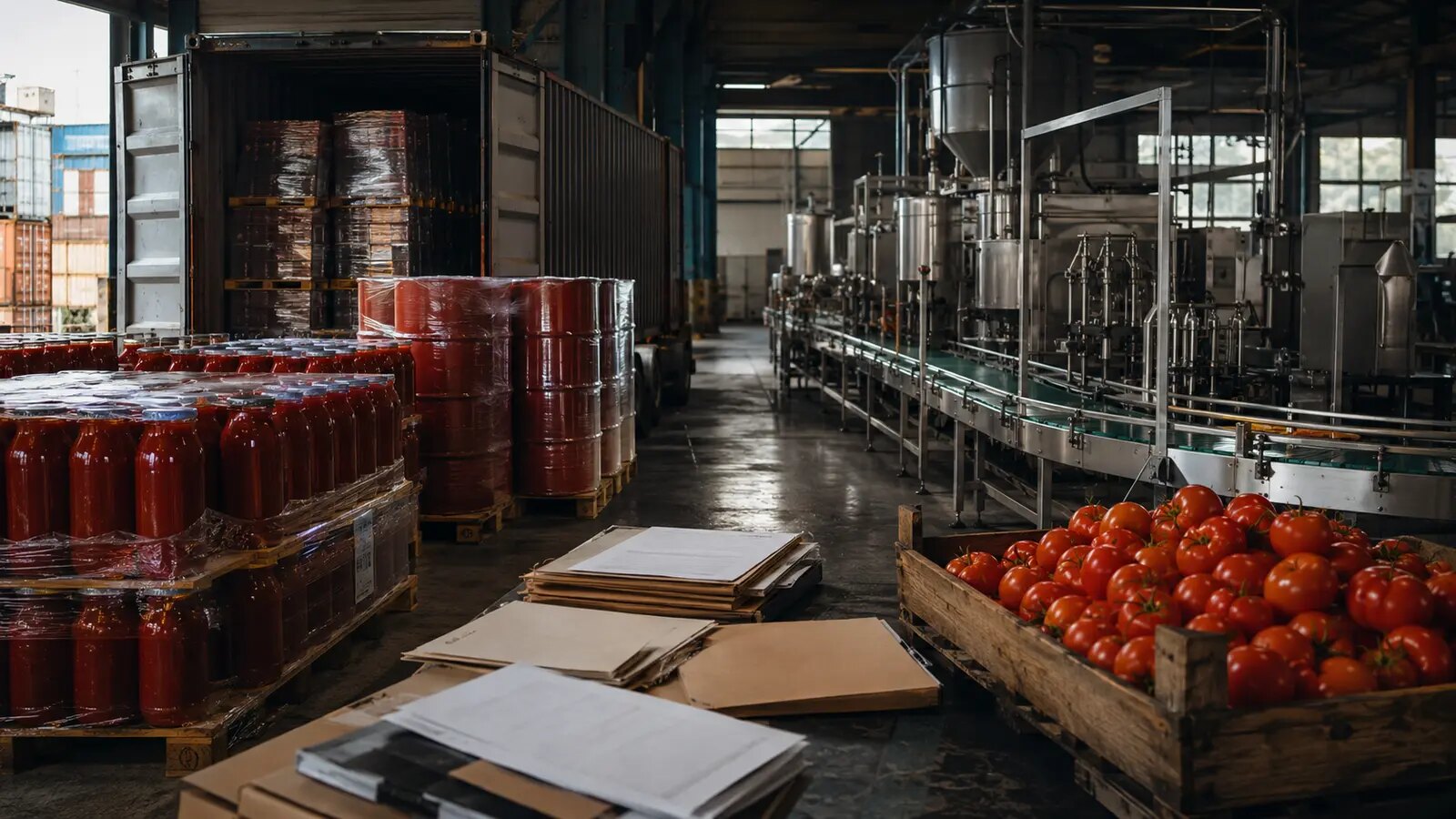
The May 2025 analysis reported close to $2 million in documentary credits for approximately 1,500 tonnes of ketchup during the first four months of the year.
On the figures used at publication, that equalled about $1,333 per tonne before duties, transport, storage, distribution and retail margin. The number made a system measured in billions visible through a product people could recognise.
was the quantity cited in the original four-month snapshot, associated with nearly $2 million in financing.
The opportunity-cost question
The post argued that the same amount might support several medium-sized production lines and around 200 direct and indirect jobs while creating demand for tomatoes and packaging.
That comparison was illustrative advocacy, not a commissioned factory feasibility study. Capacity, machinery, energy, packaging, certification and finance would determine the actual capital requirement.
Imports are not the problem by themselves
No economy produces every item it consumes, and a ketchup credit is not evidence of misconduct. The policy test is whether official dollars are allocated transparently and whether repeated import demand is compared with credible domestic production options.
A product-level strategy would compare annual demand, import value, local inputs, unit cost and employment per dollar of capital.
A historical calculation
The figures belong to the rows and reporting window used in May 2025. Later releases, revised descriptions or a different inclusion rule can produce a different total; that does not alter the original snapshot’s date or argument.
What the implied unit value can—and cannot—tell us
Dividing nearly $2 million by 1,500 tonnes produces about $1.33 per kilogram at the financing stage. That is not the shelf price and cannot be judged without product specification: paste content, recipe, package size, private label, origin and whether freight and insurance sit inside the credit.
The useful check compares like with like across invoices and customs records. A wide deviation from comparable imports can trigger review, but it is not proof of mispricing until quality, contract terms and logistics are examined.
Testing the factory alternative
The claim that the same capital could support production lines is best treated as an investment hypothesis. A feasibility study would estimate annual demand, tomato or paste supply, imported ingredients, bottles and caps, machinery, electricity, water, certification, working capital and distribution.
Local production may still rely on imported concentrate and packaging, so it does not automatically save the full credit value. Its case should rest on value added, jobs, resilience, quality and competitive cost rather than the word “local” alone.
Trade finance and industrial policy should meet
Repeated import finance contains market intelligence: it shows demand large enough for firms and government to test domestic capacity. Banks could finance viable machinery and working capital on commercial terms, while government improves standards, power and competition rather than selecting a protected producer.
The policy choice is not to ban ketchup imports. It is to compare a recurring foreign-exchange bill with transparent private investment opportunities and to remove obstacles where domestic production can compete.
The data that would settle the comparison
Publish value, weight, packaging unit, origin, applicant, supplier, bank, execution and customs clearance for the relevant tariff codes. Pair those data with wholesale and retail prices and any verified domestic production.
That evidence would reveal the true landed unit cost, market size and concentration, allowing investors to assess a factory and regulators to test invoices without turning a familiar consumer product into an allegation.
Historical note: The value, volume and factory comparison are reproduced from the contemporaneous public copy. The industrial comparison is illustrative rather than an audited investment quotation.