↗
Political economy
Tracking the institutions, incentives and power structures behind Libya’s public finances and economic choices.
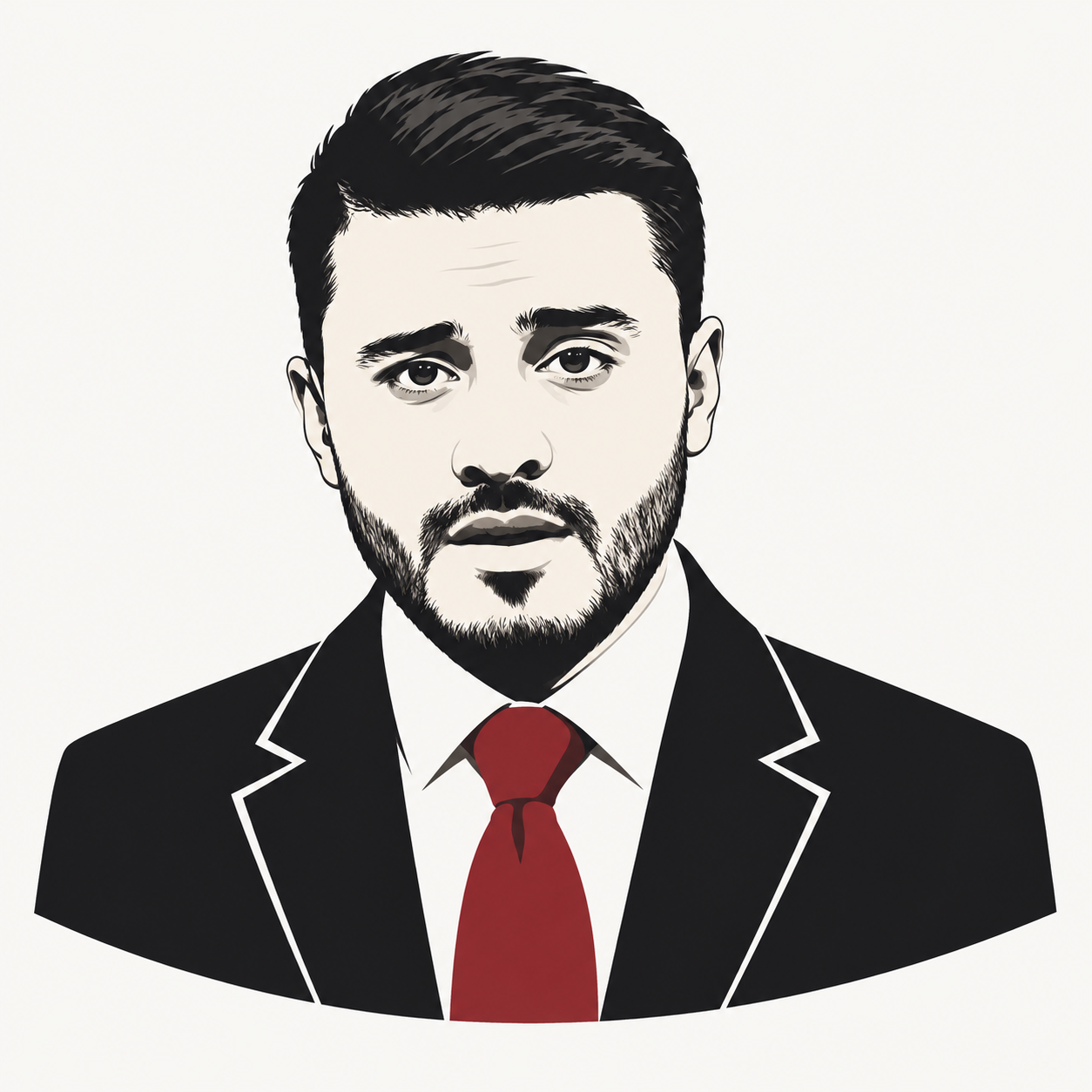 Mohamed Algarj
LIBYAN JOURNALIST · ECONOMIC RESEARCHER
I report on the forces that shape Libya’s economy — from public finance and monetary policy to oil, institutions and power.
محمد القرج · MOHAMED ALGARJ
01 / PROFILE
years across field reporting, television and policy research
Mohamed Algarj is a Libyan journalist, economic researcher and strategic communications consultant whose work sits at the intersection of public money, institutional power and everyday life.
His reporting and analysis focus on Libya’s central bank, public expenditure, foreign-exchange policy, oil and energy — translating dense records into clear, accountable public knowledge.
02 / EDITORIAL FOCUS
Independent, document-led analysis built for readers who want more than a headline.
Tracking the institutions, incentives and power structures behind Libya’s public finances and economic choices.
Reporting on production, revenues, infrastructure and the security decisions shaping Libya’s most consequential sector.
Making exchange rates, foreign-currency flows and central-bank decisions legible beyond the balance sheet.
SEARCH-LED RESEARCH
Four permanent guides connect the questions international readers ask to the original records and analysis already published here.
Open the Libya research guide ↗03 / FROM THE FIELD
In May 2019, while covering the conflict south of Tripoli for Libya Alahrar, Algarj and cameraman Mohamed Al‑Shaibani were detained for more than three weeks. International and Libyan organisations called for their release.
That experience reinforced a principle that continues to define his work: public-interest journalism requires proximity to facts, independence from power and the resolve to keep asking.
View the documented record ↗04 / INTERNATIONAL RECORD
A selected record of international reporting, research acknowledgements and press-freedom coverage.
FIELD REPORTING
Featured for reporting from Derna after the catastrophic floods and sharing verified information from survivors, witnesses and officials.
Read source ↗RESEARCH CONTRIBUTION
Acknowledged among the Libyan researchers whose field research made this major security-sector study possible.
Read source ↗PRESS FREEDOM
CPJ documented his disappearance while reporting in Tripoli and called for his immediate release and protection as a civilian journalist.
Read source ↗INTERNATIONAL COVERAGE
Agence France-Presse reported his release after more than three weeks in detention and sustained international condemnation.
Read source ↗MEDIA FREEDOM
Featured in an international examination of the risks, intimidation and arbitrary detention confronting Libyan journalists.
Read source ↗NEWS COVERAGE
International coverage documented public demonstrations demanding the release of Algarj and his colleague Mohamed Al‑Shaibani.
Read source ↗05 / INDEPENDENCE & DIGITAL RIGHTS
After six years at Libya Alahrar, Algarj said his employment was terminated over analyses published without prior management approval. He maintained that the work relied exclusively on official central-bank, audit and state-investment records and asked a basic public-interest question: where does Libya’s money go?
Read the reported statement ↗His Facebook profile — then followed by roughly 260,000 people — was disabled after a sequence of copyright notices. The documented case includes rotating claimant emails, account-level targeting and multiple notices that Meta later reversed as mistakes. Algarj continues to seek transparent review and safeguards against abuse of copyright systems targeting journalists.
View the public account ↗06 / ARABIC PUBLIC WORK
Algarj’s Arabic commentary brings official datasets into public debate, making complex economic decisions accessible to a broad Libyan audience.
زيارة الصفحة العربية لمحمد القرج ↗Foreign-currency use, reserves, exchange-rate policy and the public’s right to timely financial disclosure.
Budget execution, institutional spending and what state reports reveal — or leave unsaid.
Revenue, governance, production risk and the economic consequences of attacks on critical facilities.
07 / LIVE CHANNELS
Real-time commentary in Arabic, source documents and fast analysis of Libya’s economy and institutions.


08 / SELECTED EXPERIENCE
Research, media analysis and institutional advisory
Libya Alahrar TV · Economics presenting and editing from May 2021
BBC Eye Investigations
Chatham House · Two separate research assignments
International Organization for Migration — Libya
Libya Economic Review · Regular published contributions
09 / LATEST ANALYSIS
The most important number is often the one an institution chooses not to publish.
MOHAMED ALGARJ