 Mohamed Algarj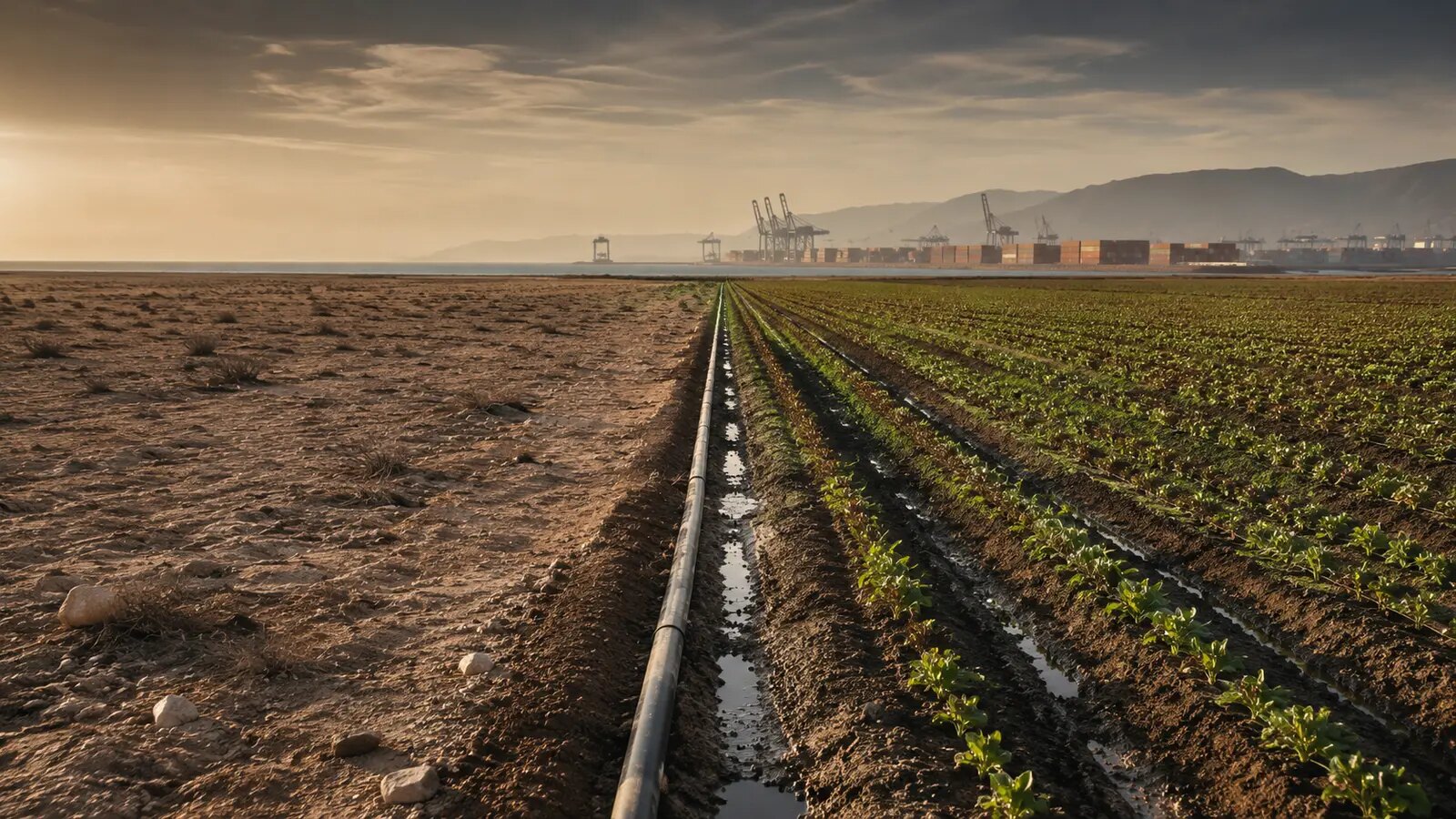
“What are we supposed to do with agriculture? We barely have enough water to drink.” The remark attributed to Prime Minister Abdulhamid al-Dbeibah could not be treated as a casual joke. It condensed a larger problem: a state speaking about agriculture as a burden while remaining deeply dependent on imported food.
The original Arabic essay formed part of the series Outside Editorial Policy. It argued that Libya’s crisis is not simply a shortage of water, but a failure to manage water, public spending and agricultural capacity as one system.
Is Libya’s problem only water?
The Great Man-Made River supplies much of the country’s drinking water through deep fossil-aquifer wells. Agriculture is also the largest water user. The figures cited in the original analysis placed agricultural use at about 83 per cent of total consumption, with traditional irrigation methods responsible for substantial losses before water reaches crops.
That is a powerful case for efficiency, not for abandoning agriculture. Modern irrigation, crop selection, pricing, maintenance and measurement can reduce waste. Evapotranspiration also returns part of agricultural water to the atmosphere, although that does not mean every litre returns as local rainfall or that water use has no cost.
The serious policy question is therefore not whether farming consumes water. It is whether Libya is using a scarce resource to produce the greatest possible food, employment and environmental value.
of Libya’s food was estimated in the original analysis to be imported — a strategic dependence that makes agricultural policy inseparable from national security.
A ministry that should be measured by production
A 2023 research analysis prepared by Mohamed Algarj, using published Central Bank and Audit Bureau data, estimated that the Ministry of Agriculture employed more than 12,000 people and spent over 420 million dinars a year. About 86 per cent was attributed to salaries, while only 9 per cent went to agricultural development or direct support for farmers.
The same analysis cited 71 million dinars spent on delayed projects that had not passed 15 per cent completion, alongside 23 million dinars in administrative costs such as vehicles, fuel and offices. It also estimated disguised unemployment inside the ministry at more than 60 per cent.
These figures require continued reconciliation against the underlying official records. But the accountability standard is clear: an agricultural institution should be evaluated not by its headcount or annual allocation, but by hectares cultivated, productivity gained, water saved, farmers supported and imports displaced.
The cost of depending on ships
The original analysis estimated that Libya imported roughly three-quarters of its food, including more than 1.5 million tonnes of grain each year. Domestic production was said to cover only 10–15 per cent of wheat and barley demand.
It also cited approximately 240,000 hectares under actual cultivation out of 470,000 hectares equipped for irrigation, together with annual production of about 348,000 tonnes of potatoes, 180,000 tonnes of dates and 32,000 tonnes of olive oil.
Those numbers do not describe a country without agricultural assets. They describe a country that has land, water infrastructure, farmers and production, but lacks the coherent policy needed to turn them into greater food security.
Agriculture as strategic capacity
The choice is not between drinking water and farming. It is between unmanaged consumption and a measured strategy that protects household supply while directing agricultural water toward crops and regions where it creates the highest public value.
Food production cannot eliminate Libya’s need for imports, nor should self-sufficiency be treated as an absolute. But a country that produces too little of what it eats becomes more exposed to currency pressure, supply shocks and the decisions of overseas suppliers.
Agriculture is therefore not a nostalgic sector at the edge of economic policy. It is productive capacity, rural employment, environmental protection and a measure of how much control Libya retains over its own food system.
Editor’s note: Al Raed’s page credits Mohamed Algarj with the 2023 research analysis contained in the Arabic article. This English edition presents that contribution as a standalone, edited translation and adds clarifying language where the original claims require cautious interpretation.