 Mohamed Algarj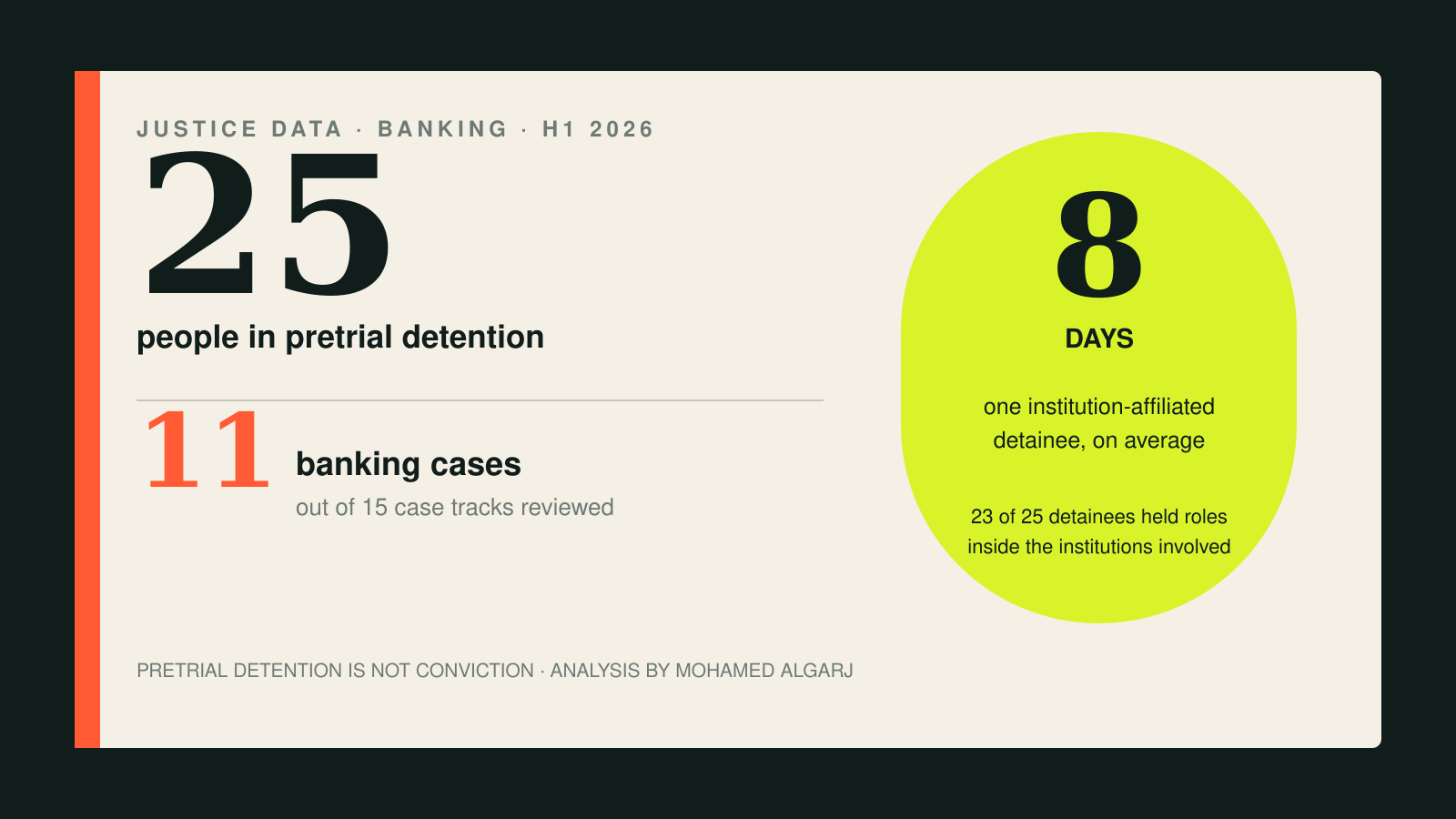
Fifteen banking- and finance-related case tracks appeared in releases published by the Libyan Attorney General’s Office during the first half of 2026. Eleven of them resulted in 25 people being placed in pretrial detention as of the dates reviewed.
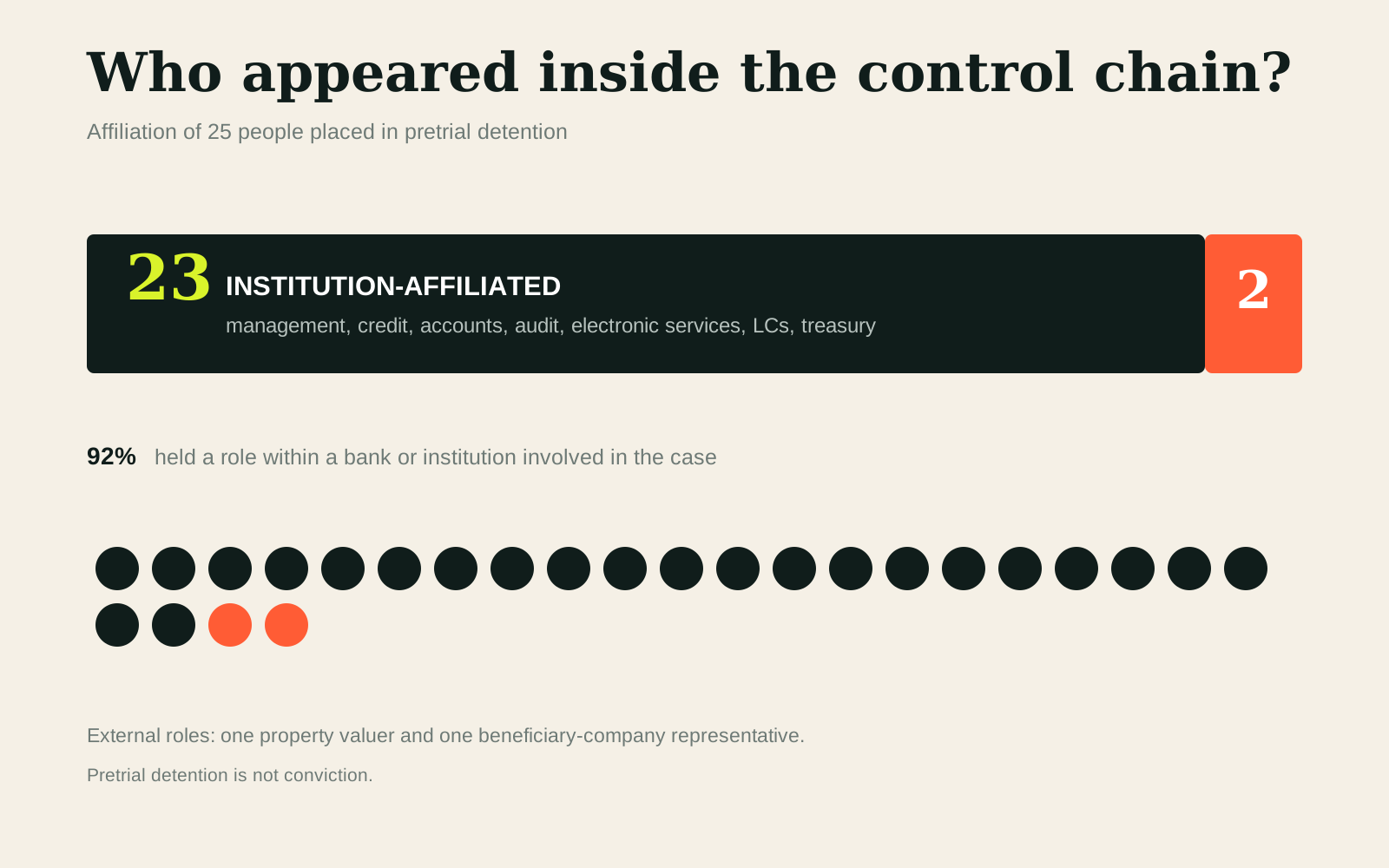
Twenty-three of the detainees were managers, officials or employees of the banks and institutions involved. Two came from outside those institutions: a property valuer linked to a LYD 57 million loan and the representative of a company involved in a $2.8 million documentary-collection case.
| Indicator | Published total |
|---|---|
| Banking and finance case tracks identified | 15 |
| Case tracks with published pretrial detention | 11 |
| People placed in pretrial detention | 25 |
| Institution-affiliated detainees | 23 |
| External detainees | 2 |
| Publication-rate calculation | One institution-affiliated detainee every 7.9 days |
Pretrial detention is not a conviction. The figure describes published procedural decisions during the review period; it does not establish criminal liability and it should not be used to describe every detainee as a public official.
Twenty-Three Detainees Came From Inside the Institutional Chain
The institution-affiliated detainees held roles across general management, credit, current accounts, internal audit, electronic services, documentary credits, accounting, treasury and project administration.
Across the 181 days in the first half of 2026, 23 such detention decisions produce a publication-rate calculation of one institutional manager, official or employee approximately every 7.9 days.
 Enlarge figure ↗
The distribution matters because the cases do not point to a single vulnerable desk. They touch the full control chain: approving credit, authenticating identity and signatures, changing account data, executing transfers, releasing cash and reviewing completed transactions.
The Largest Credit File: LYD 800 Million, With LYD 300 Million Reported Recovered
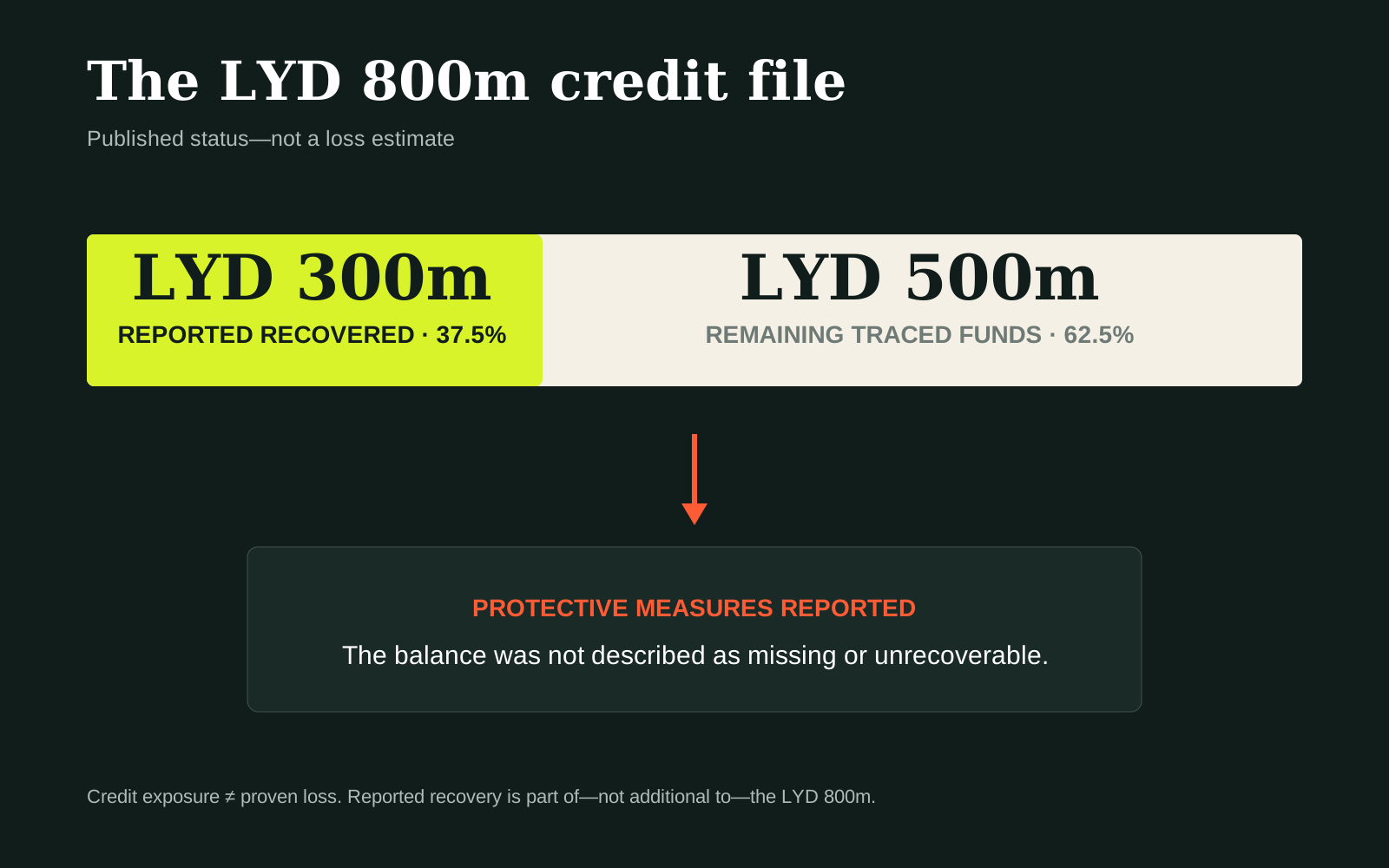
The largest disclosed case by value concerned LYD 800 million in credit granted by Sahara Bank for productive and investment operations without sufficient real security, according to the prosecution release. An assistant general manager and the head of credit were placed in pretrial detention.
The Attorney General’s Office also reported the recovery of LYD 300 million, equivalent to 37.5% of the credit amount, and measures preventing disposal of the remaining traced funds.
 Enlarge figure ↗
The remaining LYD 500 million is not a proven loss. The published wording indicates that protective measures were taken in relation to the balance; it does not establish that the money disappeared or became unrecoverable.
A separate Sahara Bank case concerned a LYD 57 million loan for the Libyan European Hospital project in Benghazi, also reportedly granted without sufficient security. A former credit director, a credit employee and a property valuer were placed in pretrial detention.
The two facilities therefore represent LYD 857 million in credit exposure discussed by prosecutors, not LYD 857 million in proven losses.
A LYD 500 Cheque Number Was Used to Move LYD 1.092 Million
At the National Commercial Bank’s Sebha University agency, investigators said that the number of a cheque originally issued for LYD 500 was used to process and withdraw LYD 1,092,000.
The transferred amount was 2,184 times the cheque’s original value. Two former agency managers and officials responsible for current accounts and accounting were placed in pretrial detention. A further account official was ordered arrested, but is not included among the 25 detainees because the reviewed release did not confirm an arrest.
Electronic Access Became a Route Into Customer Accounts
At the Islamic Bank in Misrata, prosecutors described false data being substituted for the data controlling a customer account, allegedly enabling the taking of LYD 1,237,930. Three employees authorised to operate electronic services were detained, and six accounts used to obscure the source and movement of the money were restricted.
At Wahda Bank in Zawiya, an electronic-services official was detained after a transfer was falsely attributed to a customer and “tens of thousands of dinars” were allegedly taken. Because the release did not publish an exact amount, that case cannot be included in a precise total.
These are not merely cybersecurity stories. They are questions about privileged access, dual authorisation, change logs, exception alerts and whether the same person could alter data and enable a payment without an effective independent check.
Cheques, Identities, Signatures and a Shell Company
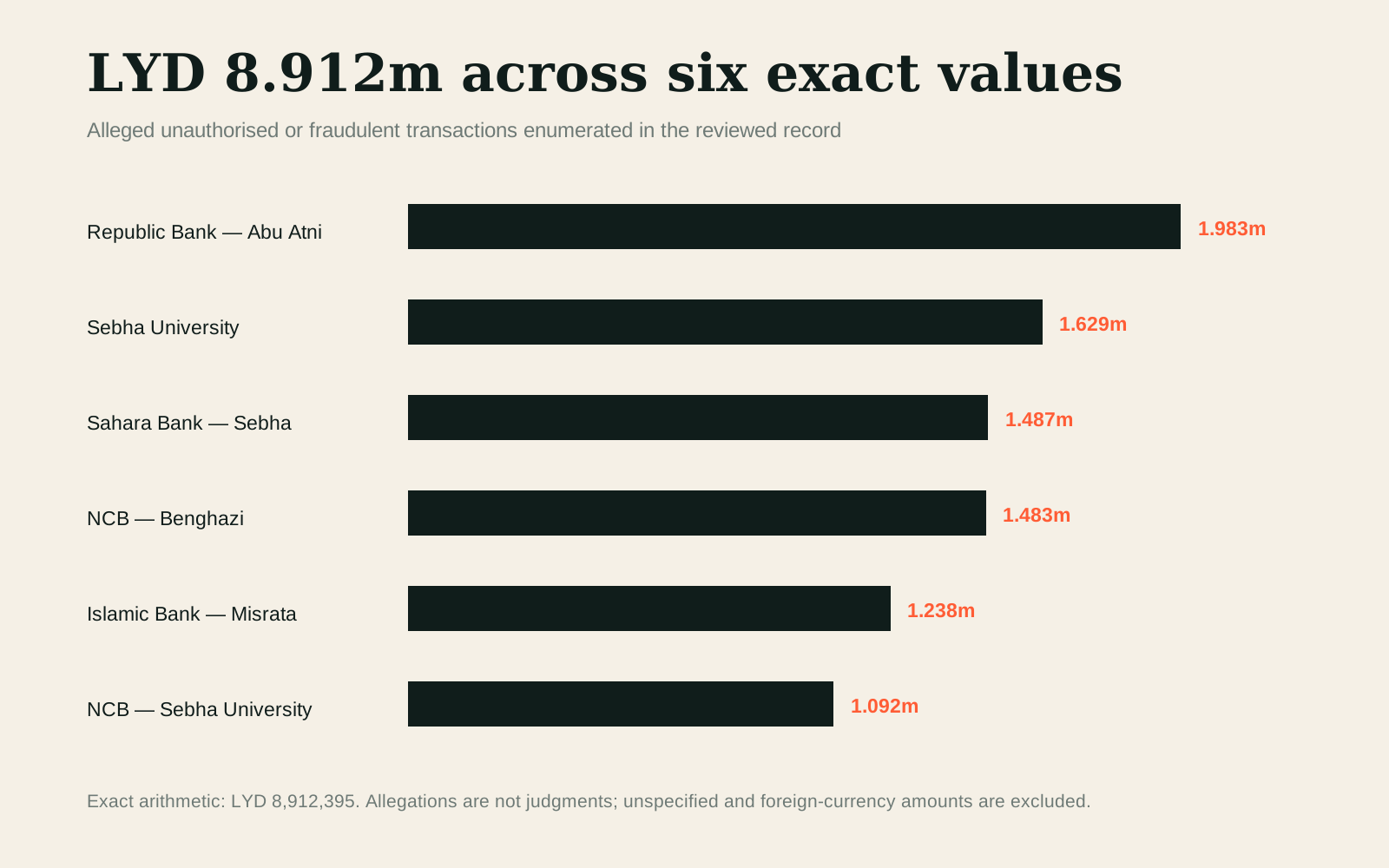
The exact dinar values enumerated in six alleged unauthorised or fraudulent transaction files total LYD 8,912,395:
| Transaction described in the published record | Exact amount |
|---|---|
| Republic Bank — Abu Atni: identity substitution, forged signature and withdrawal | LYD 1,983,000 |
| Sebha University: stolen cheques, forged signature and cash withdrawals | LYD 1,629,000 |
| Sahara Bank — Sebha: forged cheque | LYD 1,487,000 |
| National Commercial Bank — Benghazi: transfer to a shell company without matching funds | LYD 1,483,465 |
| Islamic Bank — Misrata: customer account data allegedly replaced | LYD 1,237,930 |
| National Commercial Bank — Sebha University agency: LYD 500 cheque number reused | LYD 1,092,000 |
 Enlarge figure ↗
This corrected sum is LYD 8.912 million, not LYD 9.092 million. It excludes the Zawiya amount described only as “tens of thousands”, credit facilities, foreign-currency items and any case for which no exact value was published.
$2.8 Million Without the Dinar Countervalue
At Wahda Bank’s Souq Al‑Thulatha branch, the case concerned documentary collections worth $2.8 million that were executed without depositing the required countervalue in Libyan dinars. The official responsible for documentary credits and the representative of the beneficiary company were detained; prosecutors also ordered the arrest of other participants whose number was not published.
The $2.8 million is the face value of documentary collections under investigation. It is not an amount reported recovered and it should not be labelled a final loss.
Another published item referred to a €16 million booked loss at the Libyan Foreign Bank. That is an accounting category in a different currency and cannot responsibly be added to dinar transaction allegations, credit exposure or the dollar documentary-collection value.
The Figures Must Stay in Their Legal and Accounting Categories
| Published category | Amount | What it means |
|---|---|---|
| Credit exposure discussed in two cases | LYD 857m | Facilities under investigation; not a proven loss total |
| Reported recovery in the LYD 800m credit case | LYD 300m | Reported recovered amount; part of the larger exposure |
| Six exact alleged unauthorised or fraudulent transactions | LYD 8.912395m | Sum of the exact values enumerated above |
| Documentary collections without deposited LYD countervalue | $2.8m | Transaction face value under investigation |
| Booked loss at the Libyan Foreign Bank | €16m | Separate accounting category |
Adding these numbers into one headline would double-count, mix currencies and confuse exposure, transaction value, recovery and loss. The correct finding is not one giant “missing money” figure. It is that multiple kinds of financial risk appeared across multiple control points in half a year.
What the Basel Standard Says the Control System Should Do
The Basel Committee’s principles for sound operational-risk management ↗ describe a sound control environment as one built on appropriate internal controls, segregation of duties, risk assessment, control activities, information and communication, and monitoring.
Its corporate-governance guidance for banks ↗ also places ultimate responsibility for governance, internal organisation and financial soundness with the board. These are international supervisory principles, not a finding that any Libyan bank or board breached them.
But they provide a practical test for the published cases: Who could initiate a transaction? Who could approve it? Who could change customer data? Who reviewed the exception? What alert was generated? When did internal audit or the board’s risk committee first see the pattern?
The Missing Control-Remediation Record
The prosecution releases explain allegations and procedural decisions. They do not provide a consolidated public record showing how each bank and the Central Bank of Libya responded after the control failure was identified.
For each case, a meaningful remediation record would disclose the control breached, the accounts and permissions affected, the amount frozen or recovered, the disciplinary and governance response, the independent review performed, and the date on which the control was repaired and tested.
Without that second record, enforcement remains visible while prevention remains opaque.
The first-half tally is therefore stark but legally bounded: 15 banking and finance case tracks, 25 people detained across 11 of them, 23 institution-affiliated detainees, and recurring weaknesses spanning credit, current accounts, internal audit, electronic services, documentary credits and cash withdrawal.
Source note: Libyan Attorney General’s Office releases published during the first half of 2026. International control context: Basel Committee on Banking Supervision. Calculations by Mohamed Algarj. Pretrial detention is not conviction; the financial categories and currencies are not additive.